Making public transit readable at every zoom level.

Ontra is a YC-backed platform helping cities build multimodal transit systems. The public trip planner lets riders plan journeys across bus, rail, and bike using live transit data.

I joined with an existing product. The brief was to redesign the side panel. But redesigning how information is shown in the panel meant redesigning how it's reflected on the map. One component became a connected system.

ONTRA

Client

Ontra (YC)

Role

Product Designer

Scope

Trip planner · Map view · Iconography

Year

2024

Context & Research

The starting point

Ontra is a YC-backed platform helping cities build multimodal transit systems. The public trip planner lets riders plan journeys across bus, rail, and bike using live transit data.

I joined with an existing product. The brief was to redesign the side panel. But redesigning how information is shown in the panel meant redesigning how it's reflected on the map. One component became a connected system.
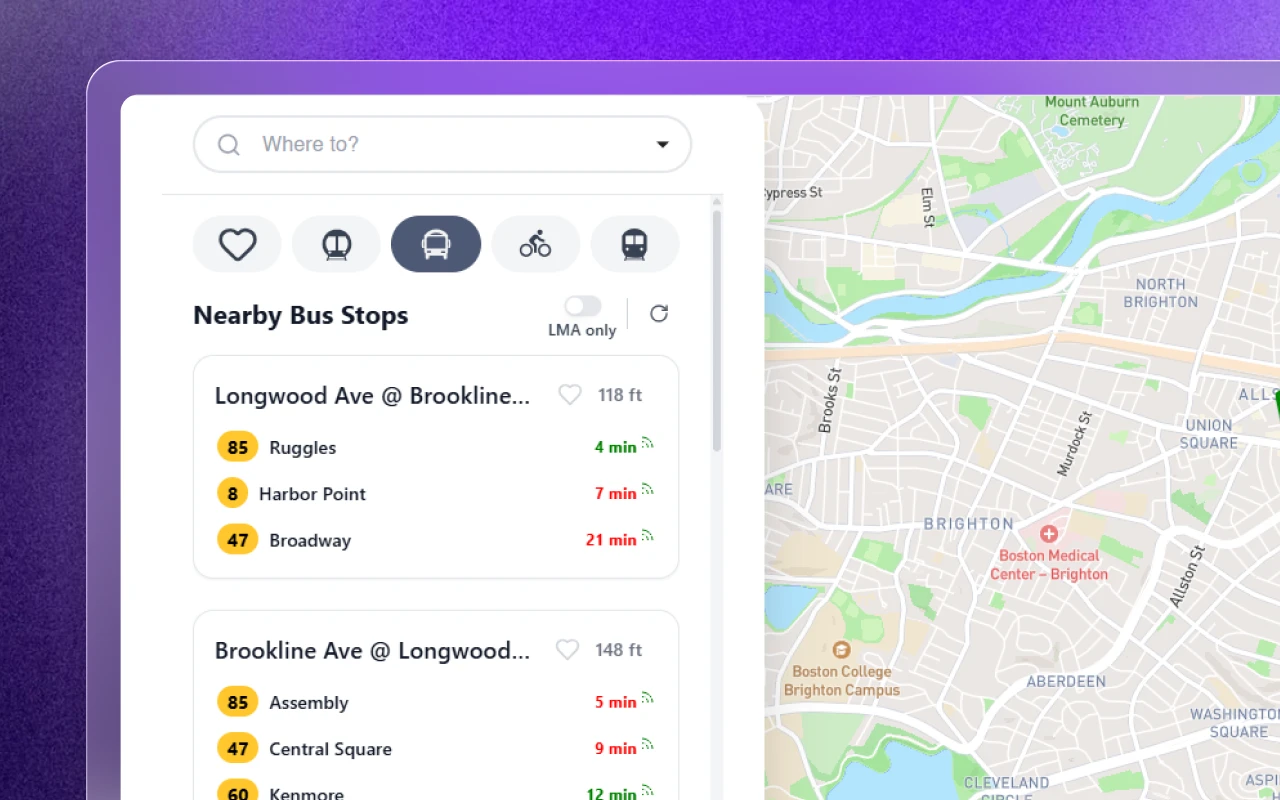
What we set out to do

  • Progressive disclosure: a journey timeline riders can read at any depth, from summary to turn-by-turn.
  • Map-panel sync: selecting a route in the panel should immediately reflect on the map.
  • Iconography system: a consistent visual language across transit modes and zoom levels.

Problem

Everything had equal visual weight

Every stop looked the same. Every route line had the same treatment. The map didn't react when you selected something in the panel.

Two things needed fixing: the side panel had no progressive disclosure, and the map was static with no visual connection to user actions.

Solution

One constraint drove both tracks: a daily commuter and a tourist should use the same interface at different depths

The panel needed progressive disclosure; the map needed to be reactive. Both needed a shared visual language.

Decision · 01

Journey Timeline

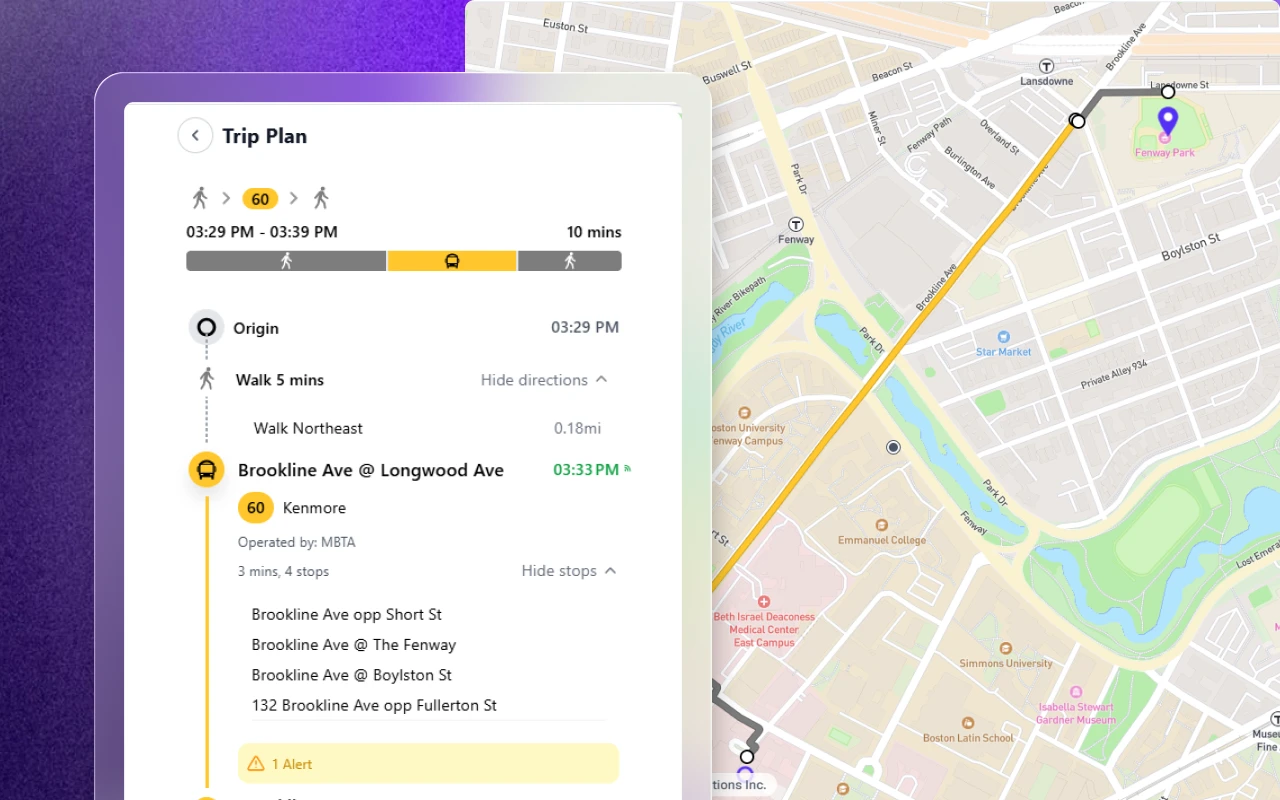
A full journey timeline breaking every trip into readable segments. Summary at the top: mode icons, total time, visual progress bar. Below that, each segment is collapsible.

"6 mins, 5 stops" has a Show Stops toggle. Walking directions collapse to "Walk 2 mins" until you need turn-by-turn. A daily commuter never expands. A tourist expands everything. Same interface, different depth.

Trip Plan · Collapsed

Trip Plan · Expanded with stops

Decision · 02

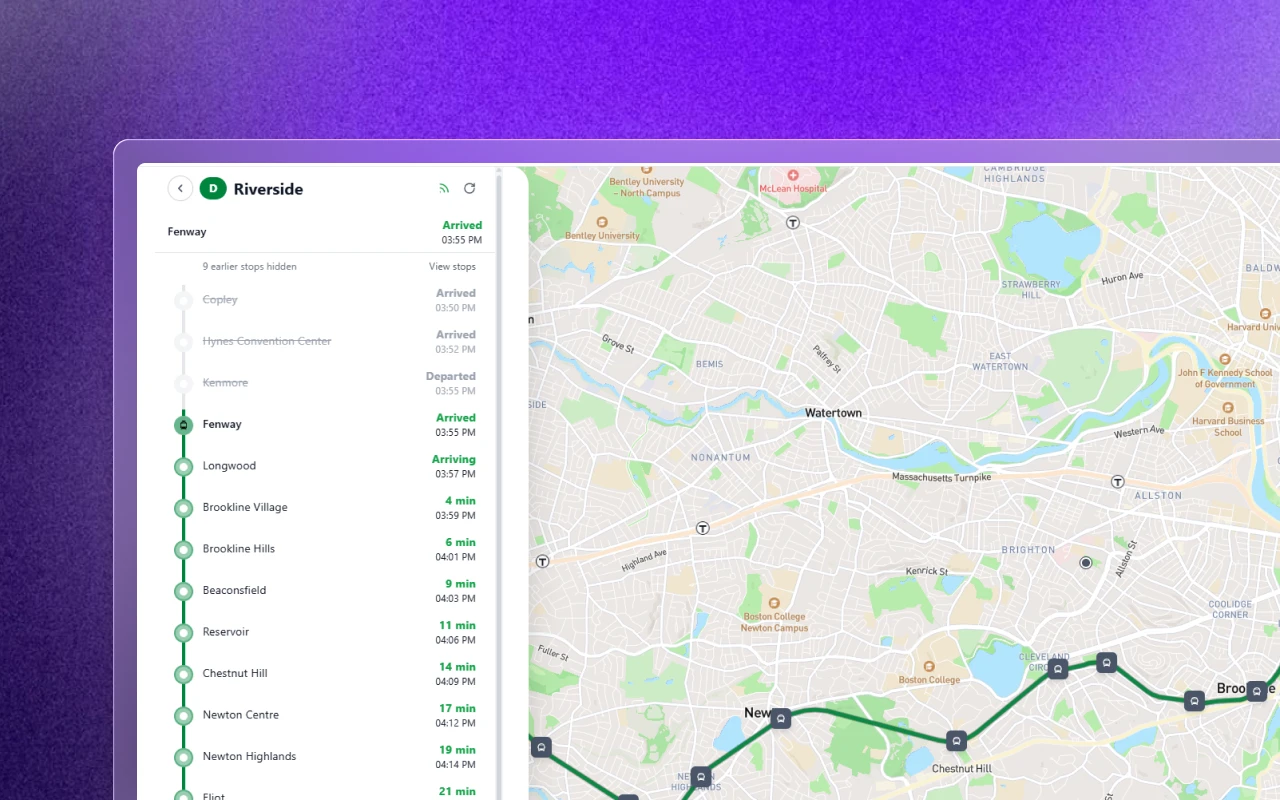
The faded stop pattern

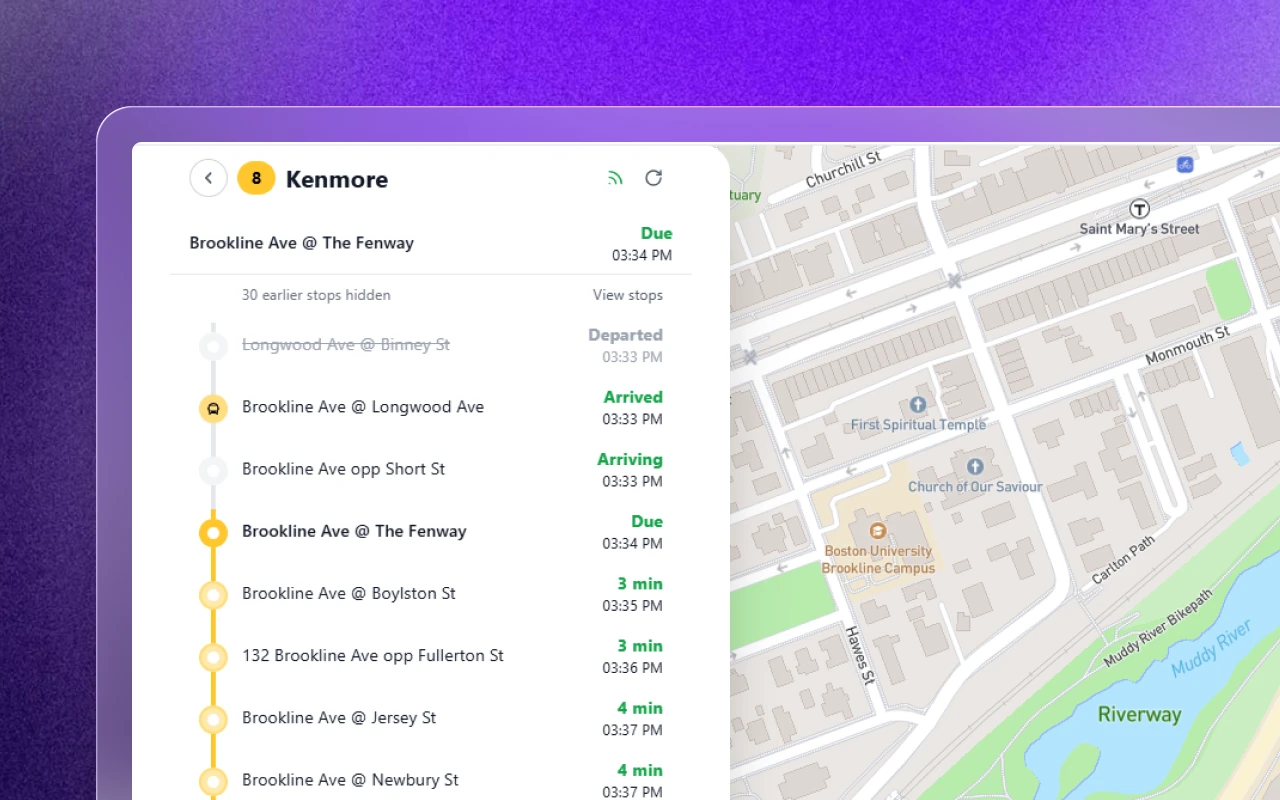
Past stops are faded. Current stop is highlighted. Future stops are full opacity.

No legend needed. Riders instinctively understand their position. The hierarchy comes from the rider's perspective, not the data's.

Route detail · past / current / future stops

Decision · 03

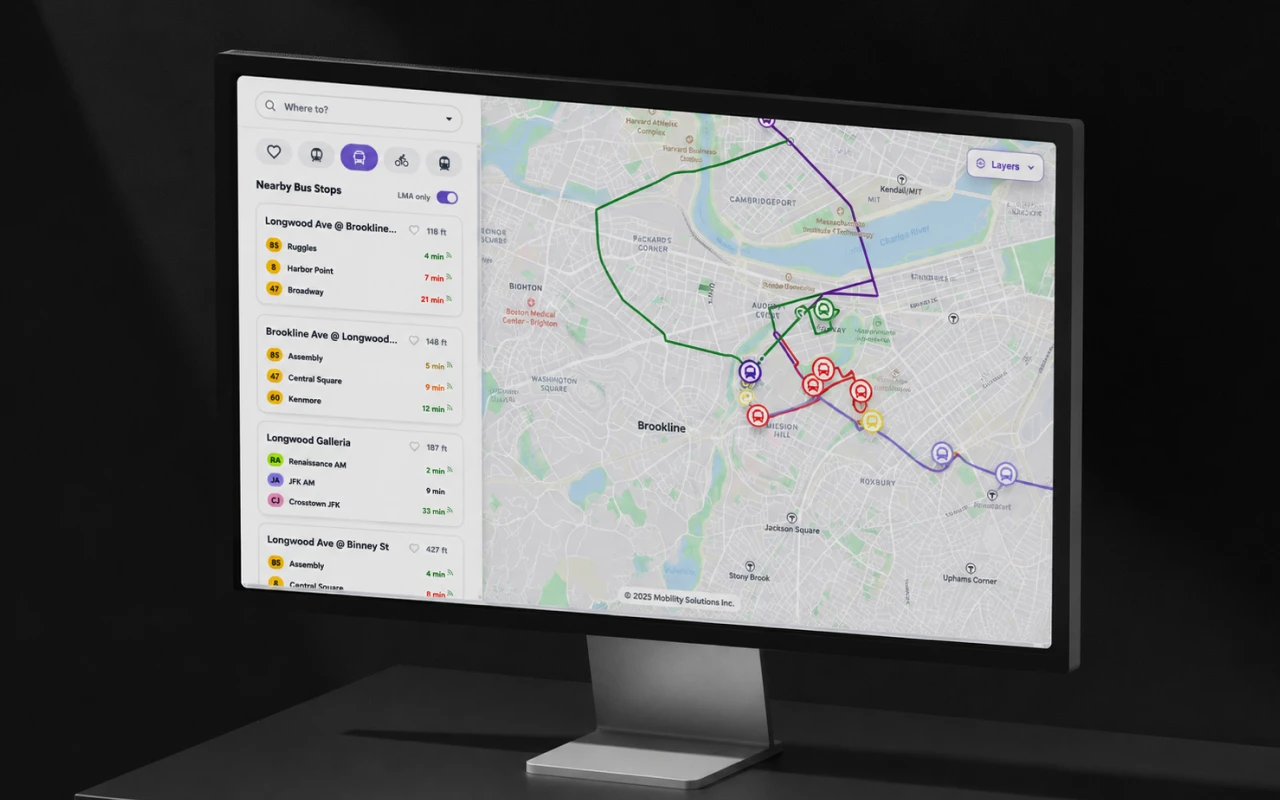
Map Iconography System

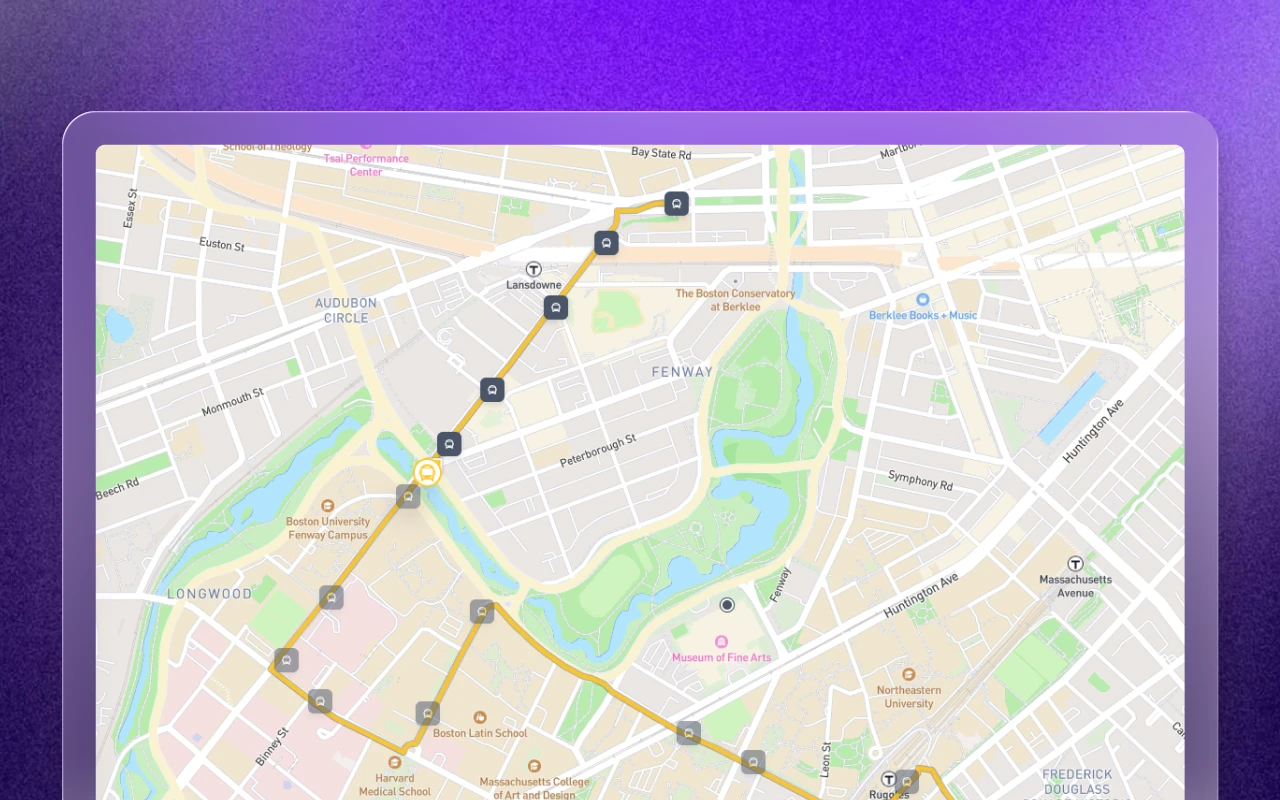
Bus stops as dark square icons. Current bus position in green, instantly scannable. Each route in its own colour. Icons adapt across zoom levels.

The hardest part: multiple routes passing through shared stops. Tested outlines, colour blocks, and split indicators. Final solution: individual coloured lines maintaining identity through shared stops. You can trace any route with your finger across the entire map.

Map · Route lines and stops

Decision · 04

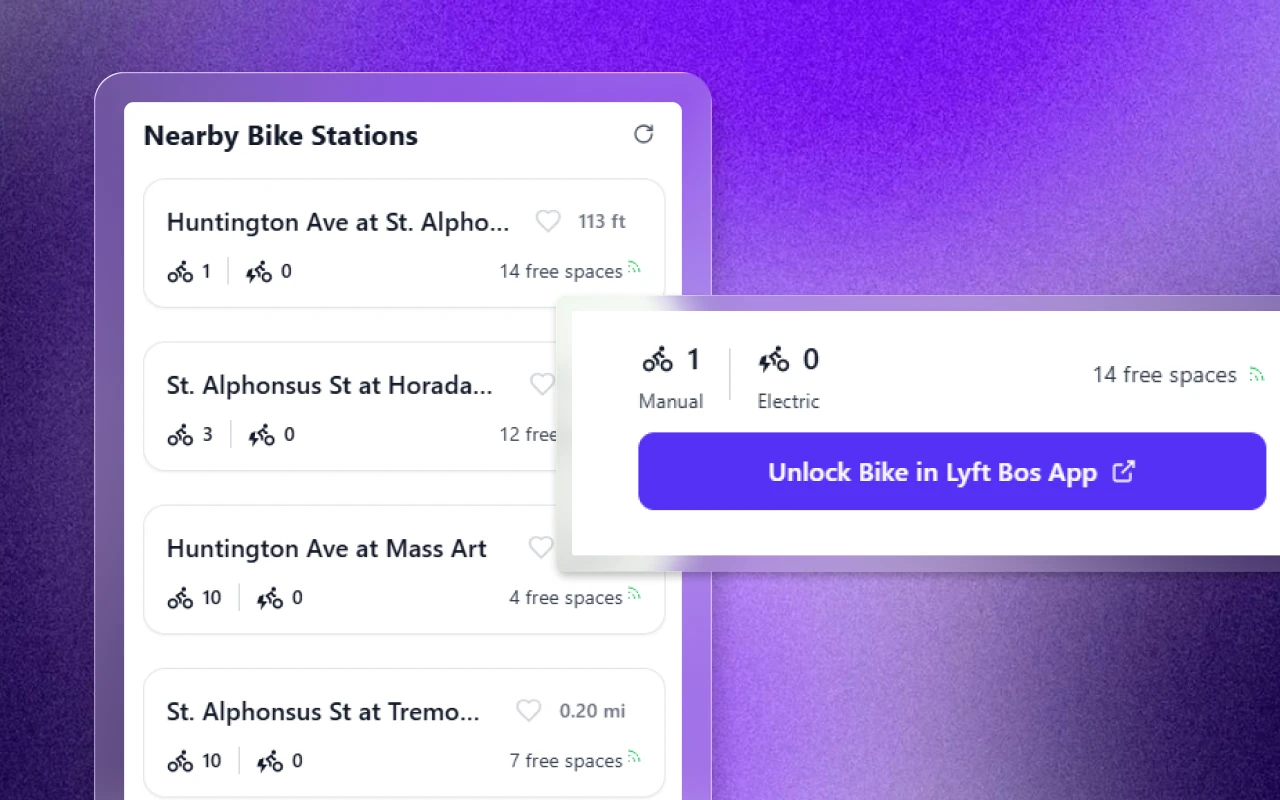
Bike Stations

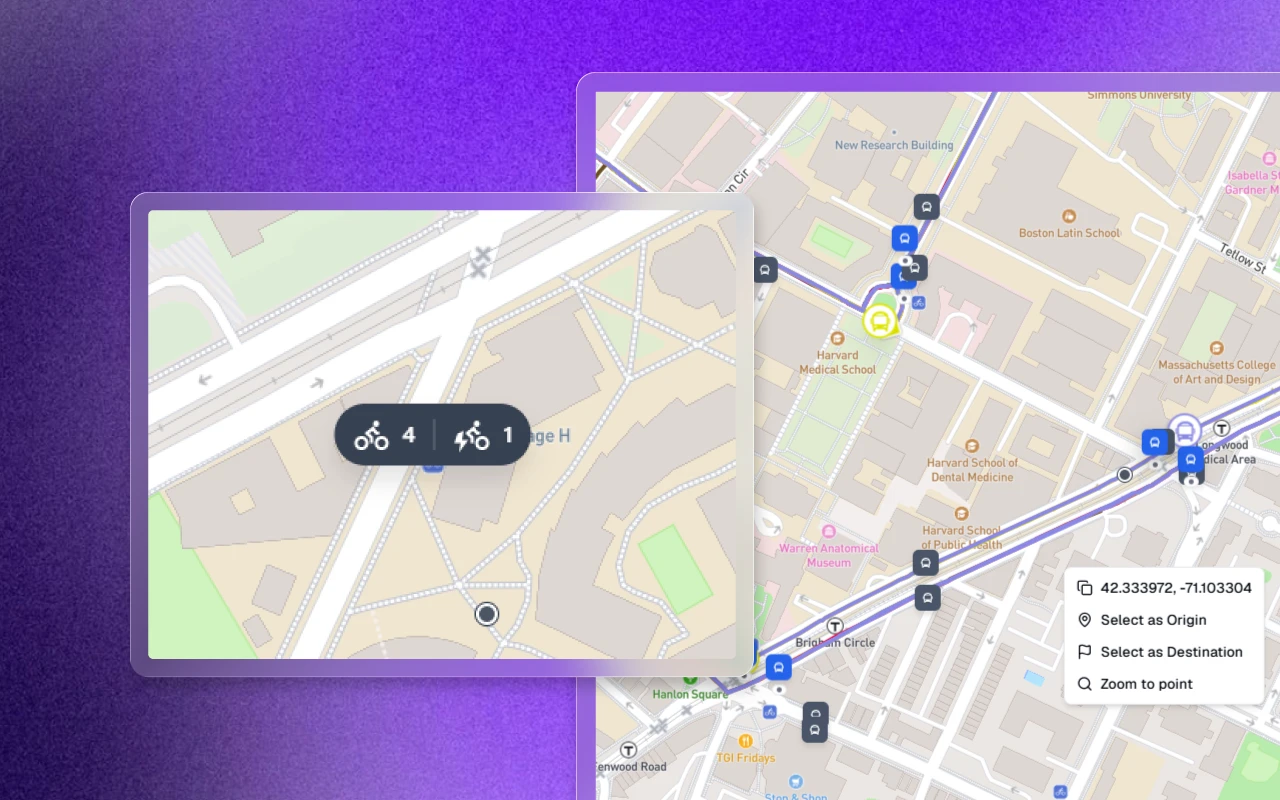
A completely new layer. The badge answers one question at map level: is it worth walking here? Two numbers side by side: 12 manual, 2 electric. One glance, no tap required.

Tapping opens a compact detail: name, distance, counts, free spaces, and a direct deep link to unlock in the Lyft app. Two interactions from "should I bike?" to unlocking one.

Bike station badges · map view

Bike station · detail panel

Decision · 05

Map-Panel Sync

Before: selecting a route changed nothing on the map. Panel and map were disconnected.

Now: select a route in the panel, the map highlights it. Active route becomes prominent, others fade. Current bus position appears as a live marker. Walking segments trace in grey. Panel and map are one system.

Trip plan · highlighted route on map

Impact

The outcome

Live trip planner serving Boston and expanding to new cities. Trusted by DC Department of Transportation, City of Fresno, and others. Selected for the 2026 Transit Tech Lab with MTA NYCT and LIRR.

Live

Boston trip planner

DC · Fresno

City partners

MTA · LIRR

2026 Transit Tech Lab

Reflection & Results

The route line treatment at shared stops.

Multiple routes through one stop is surprisingly hard to show clearly. The final solution lets you trace any single route across the map without losing it, even through intersections with four overlapping routes.

The kind of detail transit planners notice and daily commuters feel without knowing why.

Next